Es mostren els missatges amb l'etiqueta de comentaris Mímica facial. Mostrar tots els missatges

dimarts, 26 de juny del 2012

Seeking Emotional Clues Without Facial Cues // NYT

NYT // April 5, 2010 // By BENEDICT CAREY

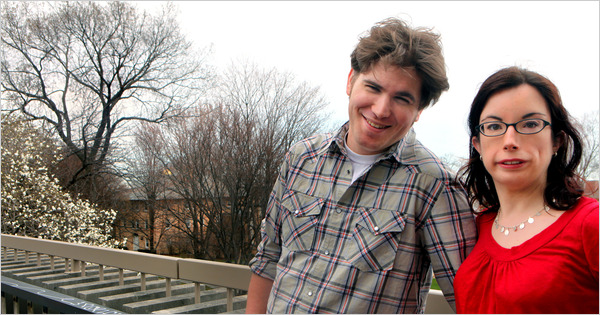
STUDYING EXPRESSIONS Kathleen Bogart, with her husband, Beau, at Tufts University, where she is a graduate student. Ms. Bogart has Moebius syndrome, which causes facial paralysis.


Like many of the Hurricane Katrinarefugees who straggled into Baton Rouge, La., in the summer of 2005, she needed more than food and shelter. She needed company, sympathy — someone, anyone, to see and feel her loss — and searched the face of her assigned social worker in vain.

But the social worker, barely out of college, seemed somehow emotionally removed. Something was missing.

“I could see the breakdown in the emotional connection between us, could see it happening and there was nothing I could do,” said Kathleen Bogart, 28, the social worker who is now a psychology researcher at Tufts University here. Ms. Bogart has Moebius syndrome, a rare congenital condition named for a 19th-century neurologist that causes facial paralysis.

When the people she helped made a sad expression, she continued, “I wasn’t able to return it. I tried to do so with words and tone of voice, but it was no use. Stripped of the facial expression, the emotion just dies there, unshared. It just dies.”

Researchers have long known that facial expressions are crucial to social interaction and have categorized them in great detail. They know which expressions are universal; they can distinguish slight differences in expression, for example between a polite smile and a genuine one.

Still, a central question remains: How does the brain interpret others’ expressions so quickly and accurately? The answer is likely to be enormously important, experts say, both for understanding how social interactions can go smoothly and how they can go off track.

Studies so far point to what psychologists call facial mimicry. During a social exchange, people subconsciously mirror each other’s surprise, disgust or delight — and, in effect, interpret the emotion by sensing what’s embodied on their own face. Interfere with the ability to mimic, these studies suggest, and people are less adept at reading others’ expressions.
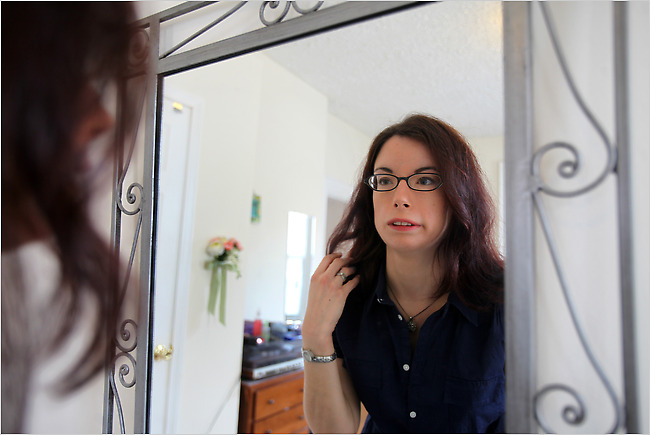


But what if a person cannot mimic any expressions, at all?

In a new study, the largest to date of Moebius syndrome, Ms. Bogart and David Matsumoto, a psychologist at San Francisco State, found that people with the disorder, whatever their social struggles, had no trouble at all recognizing others’ expressions. They do just as well as anyone else in identifying emotions in photographed faces, despite having no way to mimic.

The findings strongly suggest that the brain has other systems to recognize facial expressions, and that people with facial paralysis learn to take advantage of those. “It seems likely they would develop compensatory strategies in response to the long-term impairment,” said Tanya Chartrand, a psychologist at Duke University who is not involved in the Moebius Syndrome study, in an e-mail message. “Ones that don’t rely on the mimicry process and allow them to understand emotion through a different route.”

If such strategies are teachable, experts say, they could help others with social awkwardness, whether because of anxiety, developmental problems like autism, or common causes of partial paralysis, like Bell’s palsy.

“I had no special interest in studying facial paralysis, even though I had it; there were many other things I could have done,” Ms. Bogart said, in her office at Tufts. “But in college I looked to see what psychologists had to say about it, and there was nothing. Very, very little on facial paralysis at all. And I was just — well, I was angry.”

The emotion tightened her fist, straightened her frame and ran up into her eyes, bypassing her face: “Angry. I thought, I might as well do it because certainly no one else is.”

Moebius syndrome has no known cause; it strikes less than one in 100,000 children at birth, resulting in total, or nearly total, facial paralysis. In most cases the eyes don’t blink, and the irises move only up and down, robbing people of sideways glances and an entire vocabulary of gazes, squints and eye-rolls. The taunts tend to start early in childhood and pile up, and no one can see the embarrassment or pain in the target. “Like having a deformity and not being able to communicate, all in one,” Ms. Bogart said.

Most people with the condition adapt. “Just like for blind people, whose senses of touch, smell, hearing become sharper,” Dr. Matsumoto said. “Same thing here, I think, only it’s in the domain of nonverbal communication.” 


In the first of two studies, Ms. Bogart and Dr. Matsumoto had 36 people with Moebius syndrome look at 42 standardized photographs online of expressions, like anger, happiness and sadness. The participants correctly identified the emotions about three-quarters of the time — the same rate as adults without the condition. Their level of impairment was not related to their score. 


The results do not imply that socializing is easy or natural for people with such paralysis; most do struggle, Ms. Bogart and Dr. Matusmoto found in a follow-up study. The main reason for this (beyond the immobile features, which distract some people) has little to do with a deficit in recognizing emotions in others, the studies suggest.


It most likely comes back to mimicry, or the lack thereof. In a series of studies, psychologists have found that social bonding between conversation partners is highly dependent on a rhythmic and usually subconscious give and take of gestures and expressions that creates a kind of shared good will. “Part of that could be the buying in on the interaction itself,” Dr. Chartrand said. If the timing is not just right — the Moebius study did not account for timing — then the buy-in can feel uncertain, and interaction fizzles. The way that many people with complete, or near complete, paralysis overcome this problem is by relying on channels other than the face: eye contact, hand gestures, posture and voice tone. Many people with paralysis can make that expressive instrument as subtle and potent as a string section.
“I found my voice, figuratively and literally, in speech therapy,” said Matthew S. Joffe, the director of student services at LaGuardia Community College and a therapist in private practice, who has Moebius syndrome. Dr. Joffe described his paralysis as pronounced, “with a mouth that hangs open, and a lower lip that protrudes downward.”

“I use humor a lot,” he said. “It’s a way of showing my humanity, for one thing, and over the years people have said I have a great laugh. And I’m old enough now — I can agree. I laugh from the innards of my belly, I have many different laughs for different occasions, each one looks distinct in my body. I learned pretty early on that, given the fairly harsh standards society imposes, that if I didn’t laugh at stuff I would probably just collapse.”

Ms. Bogart, too, has a distinctive laugh. Her jaw drops,, her lips stretch and lift slightly, and her entire torso shakes. The need to rely on these peripheral channels makes people with paralysis especially sensitive to such cues in others. “At a party, I feel like I can tell whether someone will be worth talking to within seconds,” she said. “I can read people’s comfort level, or whether they can work through discomfort, very quickly.”

Taken together, some psychologists say, the evidence from people with paralysis and those without it suggests that the brain is tuning into several channels at once when it reads others’ emotional vibes. Mimicry is surely one — but it needs help. In an experiment published last year, Dutch researchers had 46 students at Leiden University pair off for a three-minute interaction with a fellow student who was either lying or telling the truth about a donation to charity. Those students told not to mimic the expressions of their conversation partner were significantly better at determining who was telling the truth than students told to mimic, or given no instructions. “Mimicry, whether spontaneous or the product of instruction, hinders observers in objectively assessing” people’s true feelings.
The gestures and tones that people with paralysis are so adept at using add more information. “And we think there may be other systems as well, in pre-motor areas of the brain, that are compiling all of this information” so that the cortex can make a judgment on the emotion, Dr. Matsumoto said.
In her current research project, Ms. Bogart is videotaping dozens of social interactions with people with all variety of paralysis, not just Moebius, but Bell’s palsy, which often stills half the face, and nerve injuries.

“The plan is to show the interviews to people to see what their impressions are, to tease apart all the elements of face, voice, gestures to see what is perceived by people as positive or negative,” she said. “The idea is that if we could learn what the best nonverbal communication techniques are, we could teach those to people who are socially awkward for any reason.”

Source: 
http://www.nytimes.com/2010/04/06/health/06mind.html?pagewanted=2&_r=2

divendres, 27 d’abril del 2012

"Facial Attraction: Choice Of Sexual Partner Shaped The Human Face"

Men with large jaws, flaring cheeks and large eyebrows are sexy, at least in the eyes of our ancestors, researchers at the Natural History Museum have discovered. Facial attractiveness played a major role in shaping human evolution, as studies on our fossil ancestors have shown our choice of sexual partner has shaped the human face. 

ScienceDaily // Aug. 13, 2007

The face holds the secret to determining the sex of our ancestors and what makes us attractive to the opposite sex for reproduction.

According to palaeontologists at the Natural History Museum, men have evolved short faces between the brow and upper lip, which exaggerates the size of their jaw, the flare of their cheeks and their eyebrows. The shorter and broader male face has also evolved alongside and the canine teeth have shrunk, so men look less threatening to competitors, yet attractive to mates. 

At puberty, the region between the mouth and eyebrows, known as upper facial height, develops differently in men and women. Unlike other facial features, however, this difference cannot be explained simply in terms of men being bigger than women. In spite of their larger size men have an upper face similar in height to a female face, but much broader. These differences can be found throughout human history. As a result, a simple ratio of measures could be used to calculate facial attractiveness in a biological and mathematical way.

Dr Eleanor Weston, palaeontologist at the Natural History Museum said, 'The evolution of facial appearance is central to understanding what makes men and women attractive to each other. We have found the distance between the lip and brow was probably immensely important to what made us attractive in the past, as it does now.' 

Source:
Citation: Weston EM, Friday AE, Liò P (2007) Biometric Evidence that Sexual Selection Has Shaped the Hominin Face. PLoS One 2(8): e710. doi:10.1371/journal.pone.0000710


http://www.sciencedaily.com/releases/2007/08/070813095003.htm

divendres, 9 de març del 2012

Brain developement: the early years, pre- and post-natal

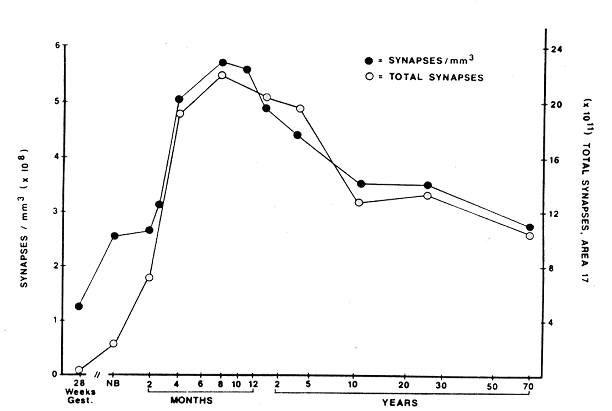
Baby brains don't actually have more neurons than adults, but way more (and way denser) synapses (the connections between neurons). But as they grow up, neurons and synapses tend to die out while, at the very same time, they remaining neurons tend to specialize and reinforce the kind of connections they've learnt to use.

In the ground breaking report of their Early Years Study, co-chairs Margaret Norrie McCain and J. Fraser Mustard stated that ". . . early child development is as important, if not more important . . . than the periods children spend in education or post-secondary education." Their study found that the development of the brain (at an early age) sets the base for competence and coping skills for the later stages of life.

The first three years, the study concluded, are especially crucial in the growth of a child's brain. A baby is born with billions of neurons in its brain. While brain cells grow throughout life, it is during the early years, the most sensitive period, when these neurons develop their function and key connections. Loving interactions between the child and other human beings provide the stimulation and nourishment that these neurons need "to connect" with one another. Conversely, if neurons are not stimulated early in life, they tend to wither and become more difficult to stimulate.

How well this web of connectedness is established in an individual child depends on two factors:

  • who the parents are, in other words, what genetic code is passed on to the child; and
  • the environment in which the child is raised - how the child is nurtured, protected and loved.

Source: http://www.take30.pe.ca/home.php?page=learn


Source : http://snarkmarket.com/blog/snarkives/science/


Alison Gopnik, Ph.D., an internationally recognized leader in the study of children's learning and development, served as the keynote speaker at this year's It's Good Business to Invest in Young Children Annual Luncheon, giving attendees insight into the sophisticated way that young children learn.


Graph developed by the Council for Early Child Development
(re: Nash, 1997; Early Years Study, 1999, Shonkoff, 2000).

There are a number of critical periods in the first three years of brain development. During these periods, specific brain functions go through fundamental growth and formation. The months after birth, for example, are critical periods for the development of vision and hearing. The years between three and four are a critical period for the development of social skills.

During critical periods, the brain is most sensitive, or able to be shaped, by a child’s environment and experiences, positive and negative. These sensitive periods present unique opportunities to affect healthy development. Providing appropriate experiences during critical periods of development helps children to reach their potential.

As with building a house, the brain is built in a particular order, from the “bottom up.” Brain circuits that process basic information are wired earlier than circuits that process more complex information. If lower-level circuits aren’t wired properly, then higher-level circuits will be faulty. Speech, for example, must be built on circuits for hearing that are developed very early in an infant’s life, long before a child starts talking.

Source: 
https://www.ecmap.ca/Early-Childhood-Development/Pages/How-the-Brain-Develops.aspx

divendres, 17 de febrer del 2012

Understanding Empathy

One of the greatest problems of moral psychology, and perhaps one of t he greatest problems in human history has been explored by many people in many disciplines: Why do normal people commit atrocities? Jean Decety, a leader in empathy research, addresses this question in the context of his work.


Source:
Understanding empathy. University of Chicago Center for Cognitive and Social Neuroscience Summer 2010 Newsletter
http://home.uchicago.edu/~decety/research.html

diumenge, 30 d’octubre del 2011

"Facial Expressions Develop in the Womb" Life Science

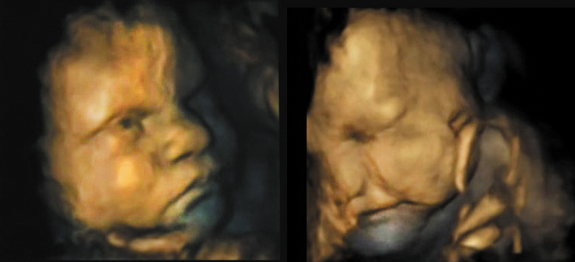
Life Science // by Wynne Parry, LiveScience Senior Writer // Photo credit Nadja Reissland // 07 September 2011

Before he or she is born, a fetus begins to move his or her face — parting lips, wrinkling a nose or lowering a brow for example — making movements that, when combined, will one day assemble expressions we all recognize in one another. A new study has shown that, as the fetus develops, these facial motions become increasingly complex.


While it was known that fetuses could form expressions while in the womb, this study tracked facial movements over time. "What we have found for the first time is you can look at the progression of the complexity of the movements," said lead study researcher Nadja Reissland, a senior lecturer at the University of Durham in the United Kingdom.

Before he or she is born, a fetus begins to move his or her face — parting lips, wrinkling a nose or lowering a brow for example — making movements that, when combined, will one day assemble expressions we all recognize in one another. A new study has shown that, as the fetus develops, these facial motions become increasingly complex.

By capturing images of two fetuses periodically from 24 to about 35 weeks of gestation, the researchers watched individual, unrelated movements progress to complex combinations, associated with recognizable facial expressions. In addition to tracking 19 total facial movements, the study focused on sets of movements associated with two expressions, one associated with crying, the other laughing. Over time, the movements associated with these began to appear in more complex combinations. They used 4-D ultrasound images, which resemble video, to track the facial motions of twofemale fetuses.

At 24 weeks, fetuses were more likely to make a single movement, like a widening of the lips for example, all by itself. Then, as the weeks passed, they began combining the movements, putting, say, a lip widening movement with a nose wrinkle. By about 35 weeks, combinations of three and four movements associated with the two expressions had surpassed single or double movements. A similar trend occurred when the researchers looked at all 19 movements.

Reissland pointed out that these facial movements don't mean the fetuses were experiencing emotion. We can see the expressions which we can recognize; we can't say whether the fetus has emotion," she said. "They [don't] have yet the cognition necessary to have the emotions."

Rather, these motions are likely a form of practice, as the fetuses prepare to enter the social world, where they must form bonds with others. Fetuses also suck their thumbs in the womb and make breathing motions, both precursors for important activities once they are born, she said.

For future research, Reissland is interested in looking for other fetal facial expressions associated with anger, smiling and sadness. This study appeared Aug. 31 in the journal PLoS ONE.

Source: http://www.livescience.com/15939-fetus-facial-expressions.html

"Study: Botox Users Have Trouble Reading Emotions in Others" TIME

We all know that Botox injections paralyze facial muscles — which is why it's used between the brows to iron out frown lines — and can therefore make users appear less emotional. Now a new study finds that the cosmetic toxin may also make recipients less able to read the emotions of others.

TIME Heatlthland // By MEREDITH MELNICK // Monday, April 25, 2011

Social psychologists say we identify emotions in part by mimicking each other's facial expressions. "When you mimic, you get a window into their inner world," said lead researcher David Neal, a psychology professor at University of Southern California, in a statement. "When we can't mimic, as with Botox, that window is a little darker."
For the new study, researchers conducted two experiments: the first involved 31 women who had received either Botox or Restylane, a dermal filler that smoothes wrinkles but doesn't affect facial movement, in Los Angeles (where better to conduct a study on cosmetic procedures?). In a second experiment, 56 women and 39 men were given a topical facial gel that functioned as an "anti-Botox," by augmenting signals from facial muscles. All participants were asked looked at a series of faces on a computer screen and identify the displayed emotions.
The researchers found that compared with the Restylane-treated control group, the women who got Botox were less able to read emotions based on facial expression. Meanwhile, the participants who got the gel were better than the others at perceiving emotions.
Past research has suggested that muscle-paralyzing treatments also hinder people from feeling their own emotions — which could potentially interfere with their ability to empathize. USA Today reported:
"A similar study published last year in the journal Emotion said Botox injections may decrease a person's ability to feel emotions. That study, conducted at Columbia University, compared Botox and Restylane in 68 people. Its lead author, psychologist Joshua Davis, hasn't seen the new study but says the finding "would suggest that facial expression is an integral component of what we consider our emotional experience. Certainly the concept is one that fits with the research we did."
"Human communication can be a very subtle thing," Neal said. "When you eliminate a slice of information — whether by communicating through e-mail and Twitter or by paralyzing your own facial muscles — it can be the difference between successful communication and failure."

Source: http://healthland.time.com/2011/04/25/study-botox-users-have-trouble-reading-emotions-in-others/


divendres, 2 de setembre del 2011

Perception of Facial Expressions Differs Across Cultures

Differences could cause cross-cultural misunderstandings, study finds

WASHINGTON—Facial expressions have been called the “universal language of emotion,” but people from different cultures perceive happy, sad or angry facial expressions in unique ways, according to new research published by the American Psychological Association.
“By conducting this study, we hoped to show that people from different cultures think about facial expressions in different ways,” said lead researcher Rachael E. Jack, PhD, of the University of Glasgow. “East Asians and Western Caucasians differ in terms of the features they think constitute an angry face or a happy face.”
The study, which was part of Jack’s doctoral thesis, was published online in APA’s Journal of Experimental Psychology: General®. Jack is a post-doctoral research assistant, and the study was co-authored by Philippe Schyns, PhD, director of the Institute of Neuroscience and Psychology at the University of Glasgow, and Roberto Caldara, PhD, a psychology professor at the University of Fribourg in Switzerland.

Some prior research has supported the notion that facial expressions are a hard-wired human behavior with evolutionary origins, so facial expressions wouldn’t differ across cultures. But this study challenges that theory and used statistical image processing techniques to examine how study participants perceived facial expressions through their own mental representations.
“A mental representation of a facial expression is the image we see in our ‘mind's eye’ when we think about what a fearful or happy face looks like,” Jack said. “Mental representations are shaped by our past experiences and help us know what to expect when we are interpreting facial expressions.”
Fifteen Chinese people and 15 Caucasians living in Glasgow took part in the study. They viewed emotion-neutral faces that were randomly altered on a computer screen and then categorized the facial expressions as happy, sad, surprised, fearful, disgusted or angry. The responses allowed researchers to identify the expressive facial features that participants associated with each emotion.

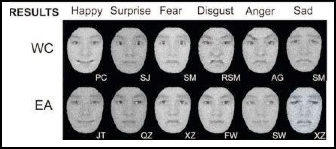
The study found that the Chinese participants relied on the eyes more to represent facial expressions, while Western Caucasians relied on the eyebrows and mouth. Those cultural distinctions could lead to missed cues or misinterpreted signals about emotions during cross-cultural communications, the study reported.
“Our findings highlight the importance of understanding cultural differences in communication, which is particularly relevant in our increasingly connected world,” Jack said. “We hope that our work will facilitate clearer channels of communication between diverse cultures and help promote the understanding of cultural differences within society.”


Above: An illustration from the study reveals the difference between how Western Caucasians (WC) and East Asians (EA) perceive the six basic facial expressions of emotion.

Article: “Internal Representations Reveal Cultural Diversity in Expectations of Facial Expressions of Emotion,” Rachael E. Jack, Roberto Caldara and Philippe G. Schyns, PhDs; University of Glasgow; Journal of Experimental Psychology: General; Vol. 141, No. 1.
Dr. Jack can be contacted by email or at 011 44 (0)7801 374 251.

The American Psychological Association, in Washington, D.C., is the largest scientific and professional organization representing psychology in the United States and is the world's largest association of psychologists. APA's membership includes more than 154,000 researchers, educators, clinicians, consultants and students. Through its divisions in 54 subfields of psychology and affiliations with 60 state, territorial and Canadian provincial associations, APA works to advance psychology as a science, as a profession and as a means of promoting health, education and human welfare.


Source:
http://www.apa.org/news/press/releases/2011/09/facial-expressions.aspx


________________________

La interpretación de las expresiones faciales es diferente en cada cultura

Se cree que las expresiones faciales constituyen un lenguaje universal de las emociones, pero un estudio reciente realizado por científicos de la Universidad de Glasgow revela que las personas de diversas culturas perciben de manera distinta dichas expresiones.

La investigación ha demostrado, por ejemplo, que los asiáticos del este y los caucásicos occidentales perciben de manera diferente una cara de enfado o una expresión de felicidad.

En el estudio se usaron técnicas de procesamiento estadístico de imágenes para analizar cómo construían los diversos participantes, 15 chinos y 15 individuos caucásicos residentes en Glasgow, sus propias representaciones mentales (imágenes que cada uno ve en su mente al mirar a alguien) sobre determinadas expresiones faciales.

Además, a los voluntarios se les mostraron rostros con diversas expresiones, y se les pidió que los relacionaran con emociones.

De esta manera, se constató que los participantes chinos se fijaban más en los ojos para interpretar las emociones reflejadas por las caras, mientras que los caucásicos se fijaban más en las bocas y en las cejas.

Según los científicos, todas estas diferencias pueden producir malas interpretaciones de las señales emocionales, en las comunicaciones interculturales. Conocerlas resulta importante por tanto para facilitar las relaciones entre individuos de culturas distintas.


Fuente:
http://www.tendencias21.net/notes/La-interpretacion-de-las-expresiones-faciales-es-diferente-en-cada-cultura_b3256740.html


divendres, 19 d’agost del 2011

Investigadors de la UAB desenvolupen una eina informàtica que identifica persones “dominants”, “amenaçadores” i "garrepes"

L'eina prediu fins a nou aspectes de la persona –atractiu, competent, fiable, dominant, garrepa, poruc, extravertit, amenaçador i simpàtic– analitzant els trets facials. L'estudi previ a l'execució de l'eina s'ha fet en col·laboració amb el departament de Psicologia de la Universitat de Princeton (EUA)

REDACCIÓ Barcelona | Actualitzada el 19/08/2011 09:45

Investigadors de la Universitat Autònoma de Barcelona (UAB) han desenvolupat una nova eina informàtica que ajuda els ordinadors a determinar si una cara entra dins de la categoria de persona amb rostre “dominant”, “amenaçador” o “garrepa”, segons es recull en un estudi publicat a la revista especialitzada Plos ONE.

L'estudi previ al desenvolupament de l'eina està dirigit per Mario Rojas, del Centre de Visió per Computador de la UAB, i s'ha fet en col·laboració amb investigadors del departament de Psicologia de la Universitat de Princeton (Estats Units).

Les característiques facials tenen un paper clau en els nostres judicis diaris sobre els altres. Segons assenyala Rojas, "la percepció de dominància és una part important dels rols socials en diferents etapes de la vida, i té també un paper decisiu en la selecció de la parella". Si la informació en què es basa l'avaluació de les cares es pogués aprendre de forma automàtica, podria ser utilitzada com a eina per dissenyar sistemes interactius millors.

L'equip encapçalat per Rojas va estudiar quina part d'aquesta informació podia ser apresa, des del punt de vista de la informàtica. L'objectiu de l'estudi era categoritzar nou judicis basats en trets facials: atractiu, competent, fiable, dominant, garrepa, poruc, extravertit, amenaçador i simpàtic. El software es va desenvolupar utilitzant tècniques d'aprenentatge de màquines, una branca de la intel·ligència artificial que utilitza exemples per ensenyar un programa com ha de funcionar.

Els investigadors van entrenar i provar els seus algoritmes mitjançant un grup d'imatges facials sintètiques, generades en estudis anteriors. En aquest treball, es va demanar a un grup de persones que descrivissin i valoressin un conjunt de fotografies de cares, i els resultats van ser utilitzats per generar imatges facials sintètiques, cadascuna d'elles associada amb trets específics, com la fiabilitat o la dominància.

En aquest últim estudi, els autors van utilitzar algunes d'aquestes imatges, juntament amb les seves etiquetes, per "ensenyar" l'ordinador com interpretar les cares i provar la precisió predictiva a la resta de les imatges. Els trets “dominant”, “amenaçador” i “garrepa” van resultar ser predictibles amb una efectivitat situada entre el 91 i el 96 per cent.

L'estudi també tenia com a objectiu descobrir quin tipus d'informació és, a nivell informàtic, útil per a la tasca de predicció. Per exemple, van descobrir que l'àrea que envolta els ulls conté més informació sobre l'atractiu, mentre que la zona que envolta la boca presenta més informació sobre l'extraversió.

Els investigadors també van posar a prova l'habilitat del programa predictiu amb cares de diversos famosos, i van descobrir que els seus resultats eren molt coherents amb les idees generals que la gent té sobre aquestes figures públiques.

Font de l'estudi original:
http://www.plosone.org/article/info:doi/10.1371/journal.pone.0023323#top


Font de l'article:
http://www.ara.cat/xarxes/Investigadors-UAB-desenvolupen-informatica-amenacadores_0_538746301.html

dilluns, 28 de març del 2011

PAUL EKMAN On Emotions and Facial Expressions (video playlist)


Dr. Paul Ekman (1934 -)  Paul Ekman was an undergraduate at the University of Chicago and New York University. He received his Ph.D. in clinical psychology at Adelphi University (1958), after a one year internship at the Langley Porter Neuropsychiatric Institute. After two years as a Clinical Psychology Officer in the U.S. Army, he returned to Langley Porter where he worked from 1960 to 2004. His research on facial expression and body movement began in 1954, as the subject of his Master’s thesis in 1955 and his first publication in 1957. In his early work, his approach to nonverbal behavior showed his training in personality. Over the next decade, a social psychological and cross-cultural emphasis characterized his work, with a growing interest in an evolutionary and semiotic frame of reference. In addition to his basic research on emotion and its expression, he has, for the last thirty years, also been studying deceit. Currently, he is the Manager of the Paul Ekman Group, LLC (PEG), a small company that produces training devices relevant to emotional skills, and is initiating new research relevant to national security and law enforcement. In 1971, he received a Research Scientist Award from the National Institute of Mental Health; that Award has been renewed in 1976, 1981, 1987, 1991, and 1997. His research was supported by fellowships, grants and awards from the National Institute of Mental Health for over forty years. Articles reporting on Dr. Ekman’s work have appeared in Time Magazine, Smithsonian Magazine, Psychology Today, The New Yorker and others, both American and foreign. Numerous articles about his work have also appeared in the New York Times, Washington Post and other national newspapers. He has appeared on 48 Hours, Dateline, Good Morning America, 20/20, Larry King, Oprah, Johnny Carson and many other TV programs. He has also been featured on various public television programs such as News Hour with Jim Lehrer, and Bill Moyers’ The Truth About Lying.

Source: http://www.paulekman.com/about-ekman/

dimarts, 17 d’agost del 2010

Redes 373: Paul Ekman sobre las expresiones humanas y las emociones

Parte 1


Parte 2


Ekman desarrolló una lista de emociones básicas a partir de investigaciones transculturales en individuos destacados de la tribu de Papúa Nueva Guinea. Observó que los miembros de una cultura aislada de la Edad de Piedra son capaces de identificar con un alto grado de confiabilidad las expresiones emocionales al observar las fotografías tomadas a personas de culturas con las que ellos no han estado familiarizados.
También eran capaces de adjudicar ciertas expresiones faciales a las descripciones de situaciones específicas. Con esa información, llegó a la conclusión de que algunas expresiones son básicas, o biológicamente universales, en la especie humana. La siguiente es la lista elaborada por Ekman (1972) de las emociones humanas:
repugnancia
felicidad
ira
miedo
sorpresa
tristeza
Sin embargo, en la década de 1990 Ekman amplió esta lista de expresiones básicas a quince, e incluyó un rango más extenso de expresiones positivas (Ekman, 1999).
________________

Cuando hablamos de sentimientos, de emociones, casi nunca pensamos en la ciencia. De hecho, hasta hace poco la ciencia renegaba de ?lo sentimental? y su estudio se relegaba a la poesía. Pero esta situación ha cambiado y antropólogos, psicólogos, neurocientíficos e incluso investigadores de inteligencia artificial se han sumado al estudio de las emociones aportando nuevas piezas con las que completar el rompecabezas.

Cuando nos quedamos en blanco ante un examen, cuando nos ruborizamos frente a una persona que nos gusta?todos en más de una ocasión hubiésemos querido no emocionarnos y actuar de forma más racional. Por ello es inevitable preguntarse: ¿para qué sirven las emociones? ¿por qué nos emocionamos cuando lo hacemos? ¿qué desencadena las emociones? ¿podemos controlarlas para, por ejemplo, evitar emocionarnos en situaciones destructivas?

La ciencia nos dice que las emociones son mecanismos cerebrales seleccionados para ayudarnos a sobrevivir y que sería muy difícil explicar la evolución humana al margen de las emociones. En esta edición de REDES daremos un paseo por la ciencia de la emoción en compañía de Paul Ekman, uno de los mayores expertos del mundo en cómo expresamos nuestros sentimientos. Con él debatiremos sobre los tres tipos principales de emociones que nos gobiernan: las básicas, que son innatas y universales, las superiores, como el amor, y las que se desarrollan y manifiestan en determinadas culturas. Además, explicaremos cómo se forma en nuestro cerebro la ?base de datos? emocional que determina cómo nos comportamos y analizaremos las expresiones faciales de las distintas emociones y sus aplicaciones en nuestra vida cotidiana, o los patrones de expresión que se usan en animación para expresar las emociones de los personajes.

On Human Face, Emotions and Human Communication: Conversation with Paul Ekman


Psychologist Paul Ekman joins Harry Kreisler to talk about his scientific work on the human face. They discuss what is now known about the role of the face in human emotions and the implications of these insights for human communication, self understanding and national security.

Series: "Conversations with History" // 4/2004 // Public Affairs // Humanities // Show ID: 8637

________________________________

From Wikipedia (http://en.wikipedia.org/wiki/Paul_Ekman)

Ekman's work on facial expressions had its starting point in the work of psychologist Silvan Tomkins. Ekman showed that contrary to the belief of some anthropologists including Margaret Mead, facial expressions of emotion are not culturally determined, but universal across human cultures and thus biological in origin. Expressions he found to be universal included those indicating anger, disgust, fear, joy, sadness, and surprise. Findings on contempt are less clear, though there is at least some preliminary evidence that this emotion and its expression are universally recognized.
In a research project along with Dr. Maureen O'Sullivan, called the Wizards Project (previously named the Diogenes Project), Ekman reported on facial "microexpressions" which could be used to assist in lie detection. After testing a total of 20,000 people[6] from all walks of life, he found only 50 people that had the ability to spot deception without any formal training. These naturals are also known as "Truth Wizards", or wizards of deception detection from demeanor.[7]
He developed the Facial Action Coding System (FACS) to taxonomize every conceivable human facial expression. Ekman conducted and published research on a wide variety of topics in the general area of non-verbal behavior. His work on lying, for example, was not limited to the face, but also to observation of the rest of the body.

dilluns, 19 d’abril del 2010

Redes 56: “Mentes conectadas sin brujería”


Redes 56: “Mentes conectadas sin brujería” // 18 y 21/04/10

Desde cómo aprendemos a hablar, a escribir o a conducir, hasta por qué se revuelve nuestro interior cuando vemos el sufrimiento de otra persona… siempre están detrás las neuronas espejo, uno de los grandes descubrimientos de las últimas dos décadas. Podríamos verlas como una red invisible que une a todos los seres humanos entre ellos y con sus predecesores, al permitir la conexión entre las mentes y la transmisión de conocimiento y cultura mediante el aprendizaje. Junto al neurocientífico Marco Iacoboni, de la Universidad de California, Eduardo Punset repasará los fantásticos poderes de las neuronas espejo.

Más información:

http://www.redesparalaciencia.com/2644/redes/2010/redes-56-mentes-conectadas-sin-brujeria