" (...) We now know we make a lot of decisions, we choose our partner in part by unconscious evaluations. There are lots of decisions that are made unconsciously then consciously. Conscious decision-making is very good when there are two alternatives because you can focus consciously very effectively on one thing at a time. If you’ve got a lot of options . . . (...) That decision that you have to make is likely to be more effective if you make it unconsciously.
So there is now a whole psychology on unconscious decision-making that is emerging, in part stimulated by Libet’s interest but also a continuation from Freud’s interest. "
Source:
http://bigthink.com/think-tank/the-importance-of-magical-thinking
Es mostren els missatges amb l'etiqueta de comentaris Vídeo. Mostrar tots els missatges
Es mostren els missatges amb l'etiqueta de comentaris Vídeo. Mostrar tots els missatges
dilluns, 2 d’abril del 2012


divendres, 9 de març del 2012
Brain developement: the early years, pre- and post-natal
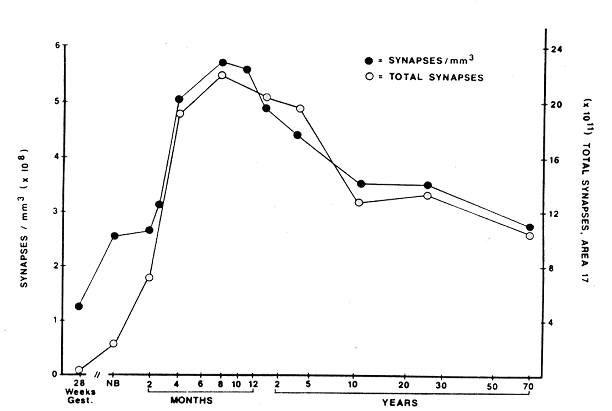
Baby brains don't actually have more neurons than adults, but way more (and way denser) synapses (the connections between neurons). But as they grow up, neurons and synapses tend to die out while, at the very same time, they remaining neurons tend to specialize and reinforce the kind of connections they've learnt to use.
In the ground breaking report of their Early Years Study, co-chairs Margaret Norrie McCain and J. Fraser Mustard stated that ". . . early child development is as important, if not more important . . . than the periods children spend in education or post-secondary education." Their study found that the development of the brain (at an early age) sets the base for competence and coping skills for the later stages of life.
The first three years, the study concluded, are especially crucial in the growth of a child's brain. A baby is born with billions of neurons in its brain. While brain cells grow throughout life, it is during the early years, the most sensitive period, when these neurons develop their function and key connections. Loving interactions between the child and other human beings provide the stimulation and nourishment that these neurons need "to connect" with one another. Conversely, if neurons are not stimulated early in life, they tend to wither and become more difficult to stimulate.
How well this web of connectedness is established in an individual child depends on two factors:
Source: http://www.take30.pe.ca/home.php?page=learn

Alison Gopnik, Ph.D., an internationally recognized leader in the study of children's learning and development, served as the keynote speaker at this year's It's Good Business to Invest in Young Children Annual Luncheon, giving attendees insight into the sophisticated way that young children learn.
There are a number of critical periods in the first three years of brain development. During these periods, specific brain functions go through fundamental growth and formation. The months after birth, for example, are critical periods for the development of vision and hearing. The years between three and four are a critical period for the development of social skills.
During critical periods, the brain is most sensitive, or able to be shaped, by a child’s environment and experiences, positive and negative. These sensitive periods present unique opportunities to affect healthy development. Providing appropriate experiences during critical periods of development helps children to reach their potential.
As with building a house, the brain is built in a particular order, from the “bottom up.” Brain circuits that process basic information are wired earlier than circuits that process more complex information. If lower-level circuits aren’t wired properly, then higher-level circuits will be faulty. Speech, for example, must be built on circuits for hearing that are developed very early in an infant’s life, long before a child starts talking.
Source:
https://www.ecmap.ca/Early-Childhood-Development/Pages/How-the-Brain-Develops.aspx
In the ground breaking report of their Early Years Study, co-chairs Margaret Norrie McCain and J. Fraser Mustard stated that ". . . early child development is as important, if not more important . . . than the periods children spend in education or post-secondary education." Their study found that the development of the brain (at an early age) sets the base for competence and coping skills for the later stages of life.
The first three years, the study concluded, are especially crucial in the growth of a child's brain. A baby is born with billions of neurons in its brain. While brain cells grow throughout life, it is during the early years, the most sensitive period, when these neurons develop their function and key connections. Loving interactions between the child and other human beings provide the stimulation and nourishment that these neurons need "to connect" with one another. Conversely, if neurons are not stimulated early in life, they tend to wither and become more difficult to stimulate.
How well this web of connectedness is established in an individual child depends on two factors:
- who the parents are, in other words, what genetic code is passed on to the child; and
- the environment in which the child is raised - how the child is nurtured, protected and loved.
Source: http://www.take30.pe.ca/home.php?page=learn
Source : http://snarkmarket.com/blog/snarkives/science/

Alison Gopnik, Ph.D., an internationally recognized leader in the study of children's learning and development, served as the keynote speaker at this year's It's Good Business to Invest in Young Children Annual Luncheon, giving attendees insight into the sophisticated way that young children learn.
Graph developed by the Council for Early Child Development
(re: Nash, 1997; Early Years Study, 1999, Shonkoff, 2000).
There are a number of critical periods in the first three years of brain development. During these periods, specific brain functions go through fundamental growth and formation. The months after birth, for example, are critical periods for the development of vision and hearing. The years between three and four are a critical period for the development of social skills.
During critical periods, the brain is most sensitive, or able to be shaped, by a child’s environment and experiences, positive and negative. These sensitive periods present unique opportunities to affect healthy development. Providing appropriate experiences during critical periods of development helps children to reach their potential.
As with building a house, the brain is built in a particular order, from the “bottom up.” Brain circuits that process basic information are wired earlier than circuits that process more complex information. If lower-level circuits aren’t wired properly, then higher-level circuits will be faulty. Speech, for example, must be built on circuits for hearing that are developed very early in an infant’s life, long before a child starts talking.
Source:
https://www.ecmap.ca/Early-Childhood-Development/Pages/How-the-Brain-Develops.aspx
dimarts, 29 de novembre del 2011
Epigenética: somos lo que comemos
¿Por qué cada vez las jóvenes alcanzan antes la pubertad? ¿Y por qué no cesa de aumentar el número de casos de ataques al corazón, cáncer o diabetes? Gracias al Epigenoma (un proyecto que va más allá del genoma) los científicos tienen ya evidencias de los cambios químicos que ocurren en la cadena de ADN y los mecanismos que activan o desactivan a los genes. Más concretamente, se ha descubierto que ciertos alimentos pueden llegar a modificar nuestro material genético para siempre. De hecho, un hospital en Holanda guarda archivos que prueban que decenas de embarazadas que consiguieron sobrevivir al hambre y la guerra de 1944, tuvieron hijos que a muy temprana edad enfermaron de cáncer, diabetes y enfermedades cardiovasculares. Todo apunta a que el hambre reprogramó los genes de las jóvenes madres y esto fue transmitido a sus hijos. No se pierdan este documental que Odisea les presenta donde profundizaremos en uno de los descubrimientos más importantes en el campo de la evolución: cómo ciertas sustancias pueden modificar nuestros genes y cuáles de ellas resultan malignas para nuestro organismo.
dilluns, 7 de novembre del 2011
"Why do we (and other animals) have brains?", Daniel Wolpert
Neuroscientist Daniel Wolpert starts from a surprising premise: the brain evolved, not to think or feel, but to control movement. In this entertaining, data-rich talk he gives us a glimpse into how the brain creates the grace and agility of human motion.
Source: http://www.ted.com/talks/daniel_wolpert_the_real_reason_for_brains.html
dilluns, 31 d’octubre del 2011
Redes 108: El cerebro construye la realidad
Redes 108: “El cerebro construye la realidad” // Fecha de emisión: 30/10/11.
Solemos pensar que nuestra percepción del mundo es mucho más completa de lo que es en realidad. Sentimos que registramos lo que pasa en nuestro entorno al igual que una cámara de vídeo, pero lo que sucede es muy distinto.
Eduard Punset viajó a Mallorca para entrevistar a algunos de los neurocientíficos más destacados del mundo que se habían reunido en el undécimo Congreso Internacional de Neurociencia Cognitiva. En este capítulo de Redes, Kia Nobre, neurocientífica de la Universidad de Oxford, nos explica algunos de los recursos que utiliza el cerebro para hacerse una idea de lo que sucede en su entorno.
Solemos pensar que nuestra percepción del mundo es mucho más completa de lo que es en realidad. Sentimos que registramos lo que pasa en nuestro entorno al igual que una cámara de vídeo, pero lo que sucede es muy distinto.
Eduard Punset viajó a Mallorca para entrevistar a algunos de los neurocientíficos más destacados del mundo que se habían reunido en el undécimo Congreso Internacional de Neurociencia Cognitiva. En este capítulo de Redes, Kia Nobre, neurocientífica de la Universidad de Oxford, nos explica algunos de los recursos que utiliza el cerebro para hacerse una idea de lo que sucede en su entorno.
dijous, 20 d’octubre del 2011
Interview with Antonio Damasio
Dr. Antonio Damasio is a renowned neuroscientist who direct's the USC Brain and Creativity Institute. Before that he was the Head of Neurology at the University of Iowa Hospitals and Clinics. His research focuses on the neurobiology of mind and behavior, with an emphasis on emotion, decision-making, memory, communication, and creativity.
His research has helped describe the neurological origins of emotions and has shown how emotions affect cognition and decision-making. He is the author of a number of books, including "Self Comes to Mind: Constructing the Conscious Brain," which will be published in November, 2010. Dr. Damasio is also the 2010 winner of the Honda Prize, one of the most important international awards for scientific achievement.
http://bigthink.com/antoniodamasio
Parts:
His research has helped describe the neurological origins of emotions and has shown how emotions affect cognition and decision-making. He is the author of a number of books, including "Self Comes to Mind: Constructing the Conscious Brain," which will be published in November, 2010. Dr. Damasio is also the 2010 winner of the Honda Prize, one of the most important international awards for scientific achievement.
http://bigthink.com/antoniodamasio
Parts:
- How Memory Works
- "Consciousness" Is How We Know We Exist
- How Our Brains Build Our Autobiographies
- How Our Brains Feel Emotion
- The Interconnectedness of Our Bodies and Our Minds
- How Much Can We Really Control Our Minds?
- The Brain's System of Checks and Balances
dilluns, 17 d’octubre del 2011
dijous, 13 d’octubre del 2011
"We are not thinking machines; we are feelling machines that think" Antonio Damasio in PBS Documentary "The Secret Life of the Brain"
The Secret Life of the Brain, a David Grubin Production, reveals the fascinating processes involved in brain development across a lifetime. The five-part series, informs viewers of exciting information in the brain sciences, introduces the foremost researchers in the field, and utilizes dynamic visual imagery and compelling human stories to help a general audience understand otherwise difficult scientific concepts. A startling new map of the human brain has emerged during the past decade of neuroscience research, contradicting much of what was previously believed. This series tells stories through a mix of personal histories, expert commentary, and animation.
1. The Baby's Brain: Wider than the Sky. A baby's brain is a mystery whose secrets scientists are just beginning to unravel. The mystery begins in the womb -- only four weeks into gestation the first brain cells, the neurons, are already forming at an astonishing rate: 250,000 every minute.
2. The Child's Brain: Syllable from Sound. A child's brain is a magnificent engine for learning. A child learns to crawl, then walk, run and explore. A child learns to reason, to pay attention, to remember, but nowhere is learning more dramatic than in the way a child learns language. As children, we acquire language — the hallmark of being human.
3. The Teenage Brain: A World of Their Own. When examining the adolescent brain we find mystery, complexity, frustration, and inspiration. As the brain begins teeming with hormones, the prefrontal cortex, the center of reasoning and impulse control, is still a work in progress. For the first time, scientists can offer an explanation for what parents already know — adolescence is a time of roiling emotions, and poor judgment.
4. The Adult Brain: To Think by Feeling. The adult brain is the apotheosis of the human intellect, but what of emotion? The study of emotion was once relegated to the backwaters of neuroscience, a testament to the popular conception that what we feel exists outside our brains, acting only to intrude on normal thought. The science has changed: Emotion is now considered integral to our over-all mental health.
5. The Aging Brain: Through Many Lives. At the age of 95, Stanley Kunitz was named poet laureate of the United States. Still writing new poems, still reading to live audiences, he stands as an inspiring example of the brain's ability to stay vital in the final years of our lives. The latest discoveries in neuroscience present a new view of how the brain ages. Overturning decades of dogma, scientists recently discovered that even into our seventies, our brains continue producing new neurons.
1. The Baby's Brain: Wider than the Sky. A baby's brain is a mystery whose secrets scientists are just beginning to unravel. The mystery begins in the womb -- only four weeks into gestation the first brain cells, the neurons, are already forming at an astonishing rate: 250,000 every minute.
2. The Child's Brain: Syllable from Sound. A child's brain is a magnificent engine for learning. A child learns to crawl, then walk, run and explore. A child learns to reason, to pay attention, to remember, but nowhere is learning more dramatic than in the way a child learns language. As children, we acquire language — the hallmark of being human.
3. The Teenage Brain: A World of Their Own. When examining the adolescent brain we find mystery, complexity, frustration, and inspiration. As the brain begins teeming with hormones, the prefrontal cortex, the center of reasoning and impulse control, is still a work in progress. For the first time, scientists can offer an explanation for what parents already know — adolescence is a time of roiling emotions, and poor judgment.
4. The Adult Brain: To Think by Feeling. The adult brain is the apotheosis of the human intellect, but what of emotion? The study of emotion was once relegated to the backwaters of neuroscience, a testament to the popular conception that what we feel exists outside our brains, acting only to intrude on normal thought. The science has changed: Emotion is now considered integral to our over-all mental health.
5. The Aging Brain: Through Many Lives. At the age of 95, Stanley Kunitz was named poet laureate of the United States. Still writing new poems, still reading to live audiences, he stands as an inspiring example of the brain's ability to stay vital in the final years of our lives. The latest discoveries in neuroscience present a new view of how the brain ages. Overturning decades of dogma, scientists recently discovered that even into our seventies, our brains continue producing new neurons.
dimecres, 17 d’agost del 2011
The Brain: Our Universe Within (Discovery Channel)
Forty years ago, American anthropologist Doctor Ralph Selecki explored the caves at Shanidar where he unearthed an image of ancient man that profoundly changed the way we saw our ancestors.
 The professor discovered a skull – a Neanderthal skull. Strangely, it was covered with microscopic pollen from the flowers of thistle, groundsel, spiraea and hollyhock, among others.
The same pollen dust covered the rest of the weathered skeleton, suggesting that his family and friends had deliberately gathered the flowers and laid them in bunches on the dead body.
These mourners left behind the earliest known signs of man’s awareness of death. Based on Doctor Selecki’s findings, Neanderthals seemed to possess what we have come to call a mind.
Complex and deeply mysterious, the human brain is an odyssey unto itself. Take this journey into the inner workings of the mind with the guidance of scientist Dr. David Suzuki, the host of this riveting Discovery Channel documentary.
This series explores the way the brain evolves from birth to adulthood; how memory works; how humans recover from brain injury; and the origins of creativity and identity.
Source:
http://topdocumentaryfilms.com/brain-our-universe-within/
The same pollen dust covered the rest of the weathered skeleton, suggesting that his family and friends had deliberately gathered the flowers and laid them in bunches on the dead body.
These mourners left behind the earliest known signs of man’s awareness of death. Based on Doctor Selecki’s findings, Neanderthals seemed to possess what we have come to call a mind.
Complex and deeply mysterious, the human brain is an odyssey unto itself. Take this journey into the inner workings of the mind with the guidance of scientist Dr. David Suzuki, the host of this riveting Discovery Channel documentary.
This series explores the way the brain evolves from birth to adulthood; how memory works; how humans recover from brain injury; and the origins of creativity and identity.
Source:
http://topdocumentaryfilms.com/brain-our-universe-within/
dimarts, 16 d’agost del 2011
Functional Brain Areas

A copy of the drawing can be found at http://www.kirkwood.edu/pdf/uploaded/695/functional_brain_areas_from_yt.pdf
Antonio Damásio - Emotions vs. feelings - Brain Education Conference at the UN (2008)
Damásio - Brain Education Conference at the UN (2008) from João Pedro Costa on Vimeo.
EDUCATION FOR A CULTURE OF PEACE António Damásio lectures at the Brain Conference, at the UN, on the 20th June 2008.
dijous, 11 d’agost del 2011
How did science got to know all we know about the mind? A BBC documentary on the darkest side of the history of experimental psychology
In a compelling and at times disturbing series, Dr Michael Mosley explores the brutal history of experimental psychology. Mosley embarks on three journeys to understand science’s last great frontier – the human mind – as he traces the history of the attempts to understand and manipulate the brain. Experiments on the human mind have led to profound insights into how our brain works – but have also involved great cruelty and posed some terrible ethical dilemmas.
Watch the full documentary (playlist – 3 hours)
Mind Control. To begin, Michael traces the sinister ways this science has been used to try to control our minds. He finds that the pursuit of mind control has led to some truly horrific experiments and left many casualties in its wake. Extraordinary archive captures what happened – scientists systematically change the behavior of children; law abiding citizens give fatal electric shocks; a gay man has electrodes implanted in his head in an attempt to turn his sexuality.
Emotions. In this film, Michael investigates how scientists have struggled to understand that most irrational and deeply complex part of our minds – our emotions. Michael meets survivors – both participants and scientists – of some of the key historical experiments. Many of these extraordinary research projects were captured on film – an eight-month-old boy is taught to fear random objects, baby monkeys are given mothers made from wire and cloth, and an adult is deliberately violent before a group of toddlers.
Broken Brains. Dr Michael Mosley concludes his series exploring the brutal history of experimental psychology by looking at how experiments on abnormal brains have revealed the workings of the normal brain. He meets remarkable individuals like Karen, who suffered from a rare condition – alien hand syndrome – which meant that one of her hands constantly attacked her. And Julia, who seems to have recovered from her stroke – until experiments reveal she is unable to recall the name of any object.
Watch the full documentary (playlist – 3 hours)
Mind Control. To begin, Michael traces the sinister ways this science has been used to try to control our minds. He finds that the pursuit of mind control has led to some truly horrific experiments and left many casualties in its wake. Extraordinary archive captures what happened – scientists systematically change the behavior of children; law abiding citizens give fatal electric shocks; a gay man has electrodes implanted in his head in an attempt to turn his sexuality.
Emotions. In this film, Michael investigates how scientists have struggled to understand that most irrational and deeply complex part of our minds – our emotions. Michael meets survivors – both participants and scientists – of some of the key historical experiments. Many of these extraordinary research projects were captured on film – an eight-month-old boy is taught to fear random objects, baby monkeys are given mothers made from wire and cloth, and an adult is deliberately violent before a group of toddlers.
Broken Brains. Dr Michael Mosley concludes his series exploring the brutal history of experimental psychology by looking at how experiments on abnormal brains have revealed the workings of the normal brain. He meets remarkable individuals like Karen, who suffered from a rare condition – alien hand syndrome – which meant that one of her hands constantly attacked her. And Julia, who seems to have recovered from her stroke – until experiments reveal she is unable to recall the name of any object.
dimarts, 2 d’agost del 2011
"Empathy is understanding how another person feels or breathing with the same lungs as somebody else" Mary Gordon
"I don't think it's ever to late to develop empathy. It starts so naturally I think we should do everything that we can to cultivate empathy and we can do it at every level. So why would we not."
http://CultureOfEmpathy.com The Center for Building a Culture of Empathy - A portal for empathy and compassion related resources; art, articles, definitions, conferences, experts, history, interviews, newsletter, science, videos, etc. For more on empathy visit our website. This is part of a larger documentary project by Edwin Rutsch on the nature of empathy. We hope you'll connect and get involved in Building a Culture of Empathy.
Mary Gordon, founder of 'Roots of Empathy' and 'Seeds of Empathy' program.
http://RootsOfEmpathy.org
Video taped, December 12, 2010 in Berkeley, California.
For full interview video and transcript and more about Mary Gordon, see.
http://cultureofempathy.com/References/Experts/Mary-Gordon.htm
http://CultureOfEmpathy.com The Center for Building a Culture of Empathy - A portal for empathy and compassion related resources; art, articles, definitions, conferences, experts, history, interviews, newsletter, science, videos, etc. For more on empathy visit our website. This is part of a larger documentary project by Edwin Rutsch on the nature of empathy. We hope you'll connect and get involved in Building a Culture of Empathy.
Mary Gordon, founder of 'Roots of Empathy' and 'Seeds of Empathy' program.
http://RootsOfEmpathy.org
Video taped, December 12, 2010 in Berkeley, California.
For full interview video and transcript and more about Mary Gordon, see.
http://cultureofempathy.com/References/Experts/Mary-Gordon.htm
dimecres, 22 de juny del 2011
Redes 100: La ciencia de la belleza
Durante mucho tiempo, predominó la idea de que las expresiones faciales de las emociones eran aprendidas culturalmente. En las últimas décadas, los científicos han descubierto lo opuesto: la forma de manifestar las emociones es innata e universal. Más recientemente, ha sucedido algo muy parecido con la percepción de la belleza.
Nuestra capacidad para apreciar lo bello no depende tanto de los cánones culturales sino de la biología, según le explica a Eduard Punset Nancy Etcoff, psicóloga del Harvard Medical School. La belleza es universal y, en definitiva, sirve para publicitar nuestra salud y fertilidad.
Nancy Etcoff
http://www.edge.org/?q=nancy_etcoff
dimarts, 7 de juny del 2011
Mente, Cerebro y Conducta: Alvaro Pascual Leone y la Estimulación Magnética Transcraneal
Entrevista en profundidad a Álvaro Pascual Leone, en el que reflexiona también sobre la relación del cerebro con los conceptos de inteligencia, mente, consciencia, voluntad, objetividad y subjetividad, la autoreorganización del cerebro, ceguera atencional, el funcionamiento de la mente en el cerebro y todo los retos científicos y éticos que las investigaciones sobre la fisiología y el funcionamiento del cerebro están planteando hoy en día a la ciencia avanzada y la sociedad
Por Tecnópolis
Según el filósofo americano Daniel Denett, "la mente y el alma son propiedades emergentes del cerebro". Alvaro Pascual Leone, investigador español en neurología y neurofisiología y catedrático de neurología de la Escuela Médica de la Universidad de Harvard afirma en nuestro programa de esta semana: "La mente y lo que somos es consecuencia del cerebro y de su estructura, pero el cerebro y su estructura son consecuencia de la mente también". El profesor Pascual Leone reflexiona en Tecnópolis UP TV esta semana sobre Cerebro, Mente y Conducta.
Álvaro Pascual Leone, es también director del Center for Non-Invasive Brain Stimulation (CNBS) an el Beth Israel Deaconess Medical Center (Boston, EE.UU) de la Harvard Medical School y ha desarrollado con su equipo una avanzada técnica de Estimulación Magnética Transcraneal (TMS) no invasiva del cerebro y explica sus investigaciones en una entrevista en profundidad en este programa, en el que reflexiona también sobre la relación del cerebro con los conceptos de inteligencia, mente, consciencia, voluntad, objetividad y subjetividad, la autoreorganización del cerebro, ceguera atencional, el funcionamiento de la mente en el cerebro y todo los retos científicos y éticos que las investigaciones sobre la fisiología y el funcionamiento del cerebro están planteando hoy en día a la ciencia avanzada y la sociedad.
dijous, 2 de juny del 2011
MUSIC & THE BRAIN The Music Instinct: Science and Song
The Music Instinct: Science and Song provides a ground-breaking exploration into how and why the human organism and the whole ebb and flow of the cosmos is moved by the undeniable effect of music.
This follows visionary researchers and accomplished musicians to the crossroads of science and culture in search of answers to music s deep mysteries.
This is a comprehensive look at how the brain reacts in performance, just listening, atonal music, the sensory reactions from person to person, instrument, voices to others .
The mic and camera into the uterus of a pregnant woman showing the baby smiling and hearing the music. All subjects confirming what music makers have always believed -- we are hardwired to appreciate and perform music with the cortex of the brain showing white hot light in the MRI -- the brain on music.
Very exciting program and all the more sad and depressing when it also shows the importance to our childrens' education in all subjects when they learn to play music before the age of 10 and we have cut music and art as non essential subjects.
Source:
http://topdocumentaryfilms.com/the-music-instinct-science-and-song/?utm_source=feedburner&utm_medium=feed&utm_campaign=Feed%3A+TopDocumentaryFilms+%28Top+Documentary+Films+-+Watch+Free+Documentaries+Online%29
dimarts, 17 de maig del 2011
El cerebro ante el espejo
Les invitamos a adentrarse en las profundidades del cerebro y llegar al origen mismo de la consciencia y el pensamiento
¿Cómo podemos saber si una persona en coma podría volver a estar consciente? ¿Cómo puede una persona ciega llegar a ver a través de la lengua? ¿Por qué los amputados experimentan sensaciones extrañas creyendo posser todavía los miembros perdidos? ¿Por qué necesitamos tener consciencia de nosotros mismos y de los demás para poder sobrevivir y ser felices? Hoy en día estas preguntas encuentran respuesta gracias a nuevas investigaciones en neurocirugía centradas en los mecanismos del cerebro y en la conexión entre el cuerpo y la mente. Los científicos más destacados de Norteamérica y Europa compartirán sus descubrimientos, ideas y preguntas con nosotros. Para ellos es de vital importancia llegar a comprender el por qué de la capacidad cerebral de la consciencia en los seres humanos
Fuente:
http://www.onlinedocumentales.com/ciencia_tecnologia/2973-el-cerebro-ante-el-espejo.html
¿Cómo podemos saber si una persona en coma podría volver a estar consciente? ¿Cómo puede una persona ciega llegar a ver a través de la lengua? ¿Por qué los amputados experimentan sensaciones extrañas creyendo posser todavía los miembros perdidos? ¿Por qué necesitamos tener consciencia de nosotros mismos y de los demás para poder sobrevivir y ser felices? Hoy en día estas preguntas encuentran respuesta gracias a nuevas investigaciones en neurocirugía centradas en los mecanismos del cerebro y en la conexión entre el cuerpo y la mente. Los científicos más destacados de Norteamérica y Europa compartirán sus descubrimientos, ideas y preguntas con nosotros. Para ellos es de vital importancia llegar a comprender el por qué de la capacidad cerebral de la consciencia en los seres humanos
Fuente:
http://www.onlinedocumentales.com/ciencia_tecnologia/2973-el-cerebro-ante-el-espejo.html
Empatía y de la violencia comparten las mismas zonas cerebrales
Recojo de un blog muy interesante esta artículo: "A continuación os presento un video muy interesante de una investigación llevada a cabo recientemente en la Universidad de Valencia en la que se ha encontrado que las estructuras cerebrales que se ocupan de la empatía y de la violencia comparten las mismas zonas cerebrales, con esto quieren decir que las estructuras que regulan la violencia coinciden en gran parte con las que regulan la empatia.Este puede ser un gran avance ya que la educación en empatia es el camino mas efectivo para aniquilar la violencia. Cuanto más fomentemos la empatia (esto se puede realizar desde los primeros años de vida) menos violencia se mostrara en los sujetos."
Fuente:
http://psicologiaymente.com/agresion/empatia-y-violencia/
Fuente:
http://psicologiaymente.com/agresion/empatia-y-violencia/
diumenge, 1 de maig del 2011
Daniel Goleman, los mejores vídeos sobre Inteligencia Emocional (playlist)
 "Emotional intelligence has four parts: self-awareness, managing our emotions, empathy, and social skill". Daniel Goleman is an internationally known psychologist who lectures frequently to professional groups, business audiences, and on college campuses. His 1995 book, Emotional Intelligence (Bantam Books) was on The New York Times bestseller list for a year-and-a-half.
More: http://danielgoleman.info/biography/
dissabte, 23 d’abril del 2011
Sant Jordi amb Howard Gardner
Howard Gardner i la seva teoria de les intel·ligències múltiples, m'ha semblat el llibre més atraient per celebrar aquest Sant Jordi.
Inteligencias múltiples. La Teoría en la Práctica
GARDNER, Howard
ISBN: 978-84-493-1806-1
EAN: 9788449318061
Editorial: EDICIONES PAIDÓS IBÉRICA, S.A.
Precio: 14.00 €
Este libro es una propuesta moderna y arriesgada que pretende explicar la manera en que la gente desarrolla las capacidades más importantes para su modo de vida: la inteligencia lingüística, la lógico-matemática, la espacial, la musical, la corporal y cinética, la interpersonal y la intrapersonal. Todas ellas se utilizan para resolver los distintos problemas que se nos puedan plantear cotidianamente y para alcanzar diversos fines culturales: vocaciones, aficiones y similares.
La conclusión no es sólo que la escuela del futuro debería centrarse en el individuo y ayudarle a desarrollar todas esas inteligencias, sino también que cada persona tiene su propia manera de combinarlas y utilizarlas, aunque quizá no la conozca aún. En cualquier caso, la misión de este apasionante libro es lograr que la descubra.
______________________
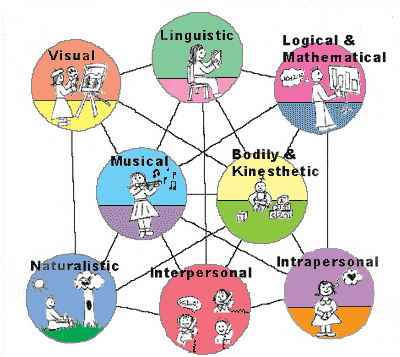 El psicólogo evolutivo Howard Gardner en 1983, publicó la obra"Los Marcos de la Mente: LA TEORÍA DE LAS INTELIGENCIAS MÚLTIPLES", en la que revela la pluralidad del intelecto al definir y describir ocho inteligencias diferenciadas, las cuales trabajan juntas para resolver problemas y alcanzar divesos fines. Para Gardner las ocho inteligencias tienen el mismo grado de importancia y es preciso que las escuelas reconozcan y se organicen para alimentar toda la variedad de inteligencias y todas las combinaciones de las inteligencias de los y las estudiantes.
Gardner describe ocho tipos de inteligencias diferenciadas en el ser humano siendo ellas:
•Inteligencia lingüístico- verbal: Los y las estudiantes demuestran esta inteligencia cuando utilizan el lenguaje para describir, informar, connvencer y son sensibles a las palabras. Se estimula proporcionándoles materiales para elaborar peíódicos murales Permite, narrar, escribir, describir, informar, convencer, resumir, etc.
• Inteligencia lógico-matemática: Se demuestra esta inteligencia cuando los y las estudiantes practican destrezas de razonamiento y solucion de problemas. Permite enumerar, deducir, medir. Es característica de los científicos. Se estimula a través de juegos matemáticos y lógicos.
• Inteligencia musical: esta inteligencia los y las estudiantes la demuestran cuando cantan, tararean, reconocen diferentes sonidos y perciben los diferentes matices. Se estimula practicando con instrumentos musicales y jugando con diferentes sonidos.
• Inteligencia Interpersonal: Esta inteligencia se manifesta cuando los y las estudianes comprenden a los demás, se comunican, resuelven conflictos se organizan y hacen amigos. Permite interactuar con los demás, poder comprender a otras personas. Se estimula a través de juegos de socialización.
• Inteligencia visual-espacial: Inteligencia que se demuestra cuando los y las estudiantes manifiestan habilidad para orientarse, pensar en tres dimensiones permite distinguir formas y objetos con precisión, y transformar los objetos a través de la imaginación, localizar objetos con precisión en el espacio y el tiempo. Se estimula mediante el dibujo, diseño y utilización de mapas, lecturas compartidas, jugos y contemplar obras de arte.
• Inteligencia cinético-corporal: Los y las estudiantes demuestran esta inteligencia cuando actúan, hacen manualidades ,permite usar el cuerpo con habilidad y con fines expresivos. Característica de los grandes bailarines y deportistas, actores, Se estimula con juegos que permitan aumentar las capacidades de los sentidos, con actividades teatrales, bailes y deportes.
• Inteligencia naturalista o ambiental: Esta inteligencia se manifiesta cuando los y las estudiantes sienten atracción y sensibilidad por el mundo natural, fenómenos científicos, explorar seres vivos, etc. Se estimula investigando la naturaleza, actuando sobre ella y analizando los fenómenos naturales.
• Inteligencia intrapersonal: Esta inteligencia tiene la característica de ser mas privada está orientada hacia dentro, y requiere de otras inteligencias para poder ser observada en funcionamiento. Debe proporcionársele oportunidades para hacer sus proyectos personales proporcionandole espacios tranquilos y privados, materiales para escribir y expresarse.
Fuente:
http://fineans.usac.edu.gt/wiki/index.php/MARFFDEP_Estrategias_de_aprendizaje

Inteligencias múltiples. La Teoría en la Práctica
GARDNER, Howard
ISBN: 978-84-493-1806-1
EAN: 9788449318061
Editorial: EDICIONES PAIDÓS IBÉRICA, S.A.
Precio: 14.00 €
Este libro es una propuesta moderna y arriesgada que pretende explicar la manera en que la gente desarrolla las capacidades más importantes para su modo de vida: la inteligencia lingüística, la lógico-matemática, la espacial, la musical, la corporal y cinética, la interpersonal y la intrapersonal. Todas ellas se utilizan para resolver los distintos problemas que se nos puedan plantear cotidianamente y para alcanzar diversos fines culturales: vocaciones, aficiones y similares.
La conclusión no es sólo que la escuela del futuro debería centrarse en el individuo y ayudarle a desarrollar todas esas inteligencias, sino también que cada persona tiene su propia manera de combinarlas y utilizarlas, aunque quizá no la conozca aún. En cualquier caso, la misión de este apasionante libro es lograr que la descubra.
______________________
Gardner describe ocho tipos de inteligencias diferenciadas en el ser humano siendo ellas:
•Inteligencia lingüístico- verbal: Los y las estudiantes demuestran esta inteligencia cuando utilizan el lenguaje para describir, informar, connvencer y son sensibles a las palabras. Se estimula proporcionándoles materiales para elaborar peíódicos murales Permite, narrar, escribir, describir, informar, convencer, resumir, etc.
• Inteligencia lógico-matemática: Se demuestra esta inteligencia cuando los y las estudiantes practican destrezas de razonamiento y solucion de problemas. Permite enumerar, deducir, medir. Es característica de los científicos. Se estimula a través de juegos matemáticos y lógicos.
• Inteligencia musical: esta inteligencia los y las estudiantes la demuestran cuando cantan, tararean, reconocen diferentes sonidos y perciben los diferentes matices. Se estimula practicando con instrumentos musicales y jugando con diferentes sonidos.
• Inteligencia Interpersonal: Esta inteligencia se manifesta cuando los y las estudianes comprenden a los demás, se comunican, resuelven conflictos se organizan y hacen amigos. Permite interactuar con los demás, poder comprender a otras personas. Se estimula a través de juegos de socialización.
• Inteligencia visual-espacial: Inteligencia que se demuestra cuando los y las estudiantes manifiestan habilidad para orientarse, pensar en tres dimensiones permite distinguir formas y objetos con precisión, y transformar los objetos a través de la imaginación, localizar objetos con precisión en el espacio y el tiempo. Se estimula mediante el dibujo, diseño y utilización de mapas, lecturas compartidas, jugos y contemplar obras de arte.
• Inteligencia cinético-corporal: Los y las estudiantes demuestran esta inteligencia cuando actúan, hacen manualidades ,permite usar el cuerpo con habilidad y con fines expresivos. Característica de los grandes bailarines y deportistas, actores, Se estimula con juegos que permitan aumentar las capacidades de los sentidos, con actividades teatrales, bailes y deportes.
• Inteligencia naturalista o ambiental: Esta inteligencia se manifiesta cuando los y las estudiantes sienten atracción y sensibilidad por el mundo natural, fenómenos científicos, explorar seres vivos, etc. Se estimula investigando la naturaleza, actuando sobre ella y analizando los fenómenos naturales.
• Inteligencia intrapersonal: Esta inteligencia tiene la característica de ser mas privada está orientada hacia dentro, y requiere de otras inteligencias para poder ser observada en funcionamiento. Debe proporcionársele oportunidades para hacer sus proyectos personales proporcionandole espacios tranquilos y privados, materiales para escribir y expresarse.
Fuente:
http://fineans.usac.edu.gt/wiki/index.php/MARFFDEP_Estrategias_de_aprendizaje
Subscriure's a:
Missatges (Atom)


 Entrades

